
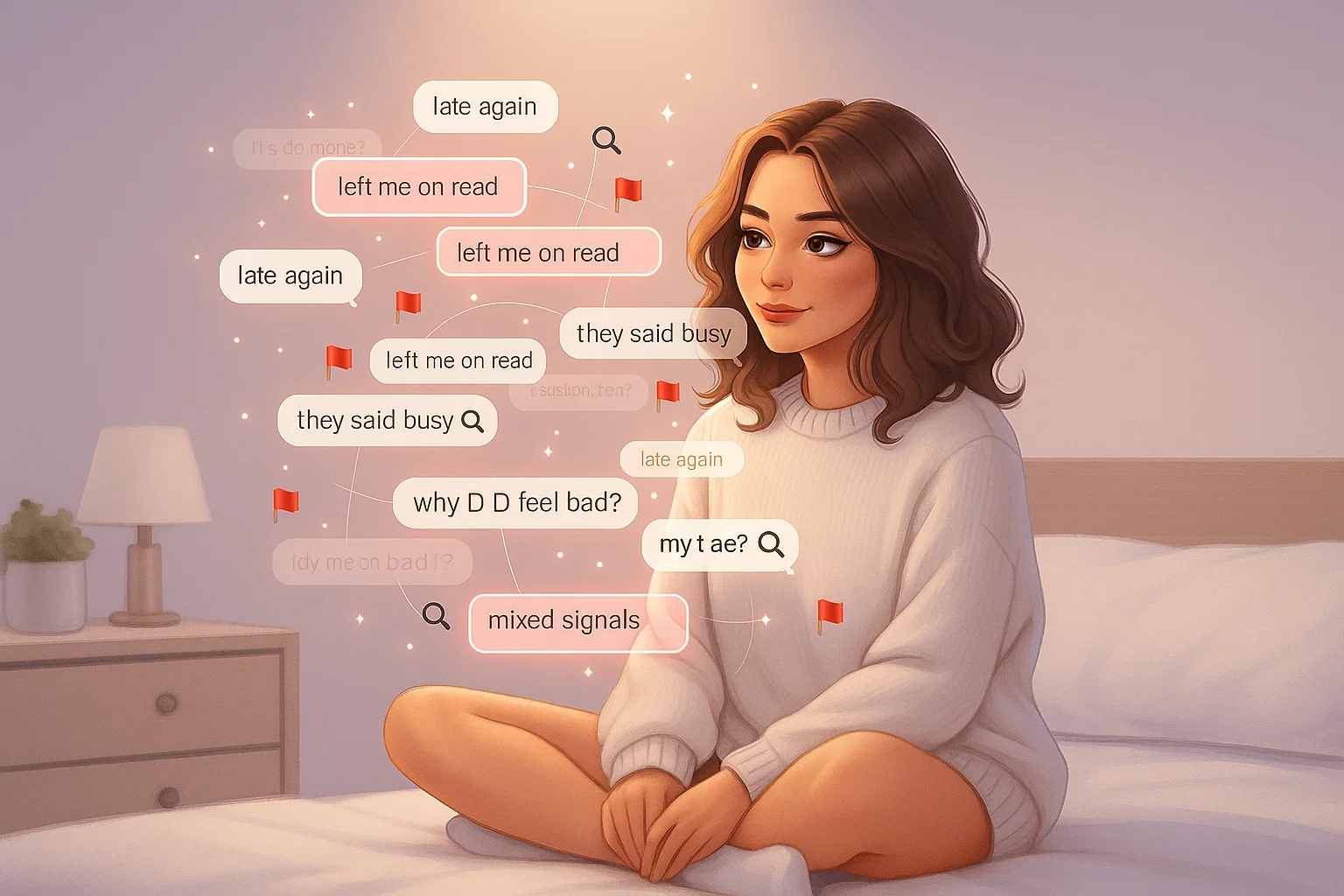
A Relationship Forensics breakdown of why you spent so long apologizing for things that were never your fault
There’s a specific kind of emotional exhaustion that comes from constantly apologizing for having needs. You know the one—where asking where the relationship is going feels like pressure, wanting consistent communication becomes “needy,” and bringing up something that hurt you turns into you being “too dramatic.”
If you’ve been there, this forensic breakdown is for you.
The Pattern You Lived (But Couldn’t See From Inside)
Let me walk you through a timeline that might feel uncomfortably familiar:
Month 1-2: Everything feels intense, exciting, maybe even “meant to be.” They text consistently, make plans, show genuine interest. You think, “Finally, someone who gets me.”
Month 3-4: Things shift. Not dramatically—just subtly. Texts become sporadic. Plans are more vague. When you mention it, you’re told you’re “overthinking” or “being paranoid.” You apologize and try to need less.
Month 5-6: You’re now walking on eggshells. Every time you express a need—for clarity, consistency, or basic emotional availability—you’re made to feel like you’re asking for too much. You spend more time apologizing than actually communicating.
Month 7+: You’ve become a smaller version of yourself. You’ve learned to predict their moods, minimize your needs, and question your own reality. When you finally bring up the pattern, they’re shocked—they had “no idea” you felt this way. Somehow, once again, it becomes your fault for not communicating sooner.
Sound familiar?
The Forensic Analysis: What Actually Happened
Here’s what you were told was happening versus what was actually happening:
What You Were Told:
- “You’re too sensitive”
- “You’re overthinking everything”
- “You’re creating problems that don’t exist”
- “You’re pushing me away with your anxiety”
- “You need to work on your trust issues”
What Was Actually Happening:
- They were making you question your perception of clear inconsistencies
- You were noticing patterns of emotional unavailability (not imagining them)
- You were identifying real problems they didn’t want to address
- They were creating distance and blaming you for noticing it
- They were deflecting accountability by pathologizing your reactions
This isn’t miscommunication. This is manipulation.
The Three Things You Apologized For (That Were Never Your Fault)
Let’s break down the most common apologies and what they really meant:
1. Asking Where the Relationship Was Going
What you were told: “Why do you always need a label? Why can’t we just enjoy this? You’re putting so much pressure on me.”
What was actually happening: You were asking for clarity after months of ambiguous behavior. That’s not pressure—that’s a reasonable request for basic information about where you stand.
The truth: If someone wanted to give you clarity, they would. If someone was genuinely committed, you wouldn’t have to extract that information like you’re conducting an interrogation.
You weren’t being pushy. You were asking for the bare minimum.
2. Bringing Up Something That Hurt You
What you were told: “You’re so dramatic. I was just joking. You take everything so seriously. You’re too emotional.”
What was actually happening: You were communicating a boundary. You were letting them know that something they did or said didn’t feel good. That’s healthy communication in any relationship.
The truth: When someone makes you feel bad for expressing hurt, they’re not interested in understanding you—they’re interested in continuing the behavior without consequences.
You weren’t being dramatic. You were being honest.
3. Wanting Consistent Communication
What you were told: “You’re so needy. Not everyone needs to text all day. You’re suffocating me. You need to work on your attachment issues.”
What was actually happening: You were asking for daily check-ins—literally the most basic form of maintaining connection in a modern relationship.
The truth: Healthy partners don’t make you feel bad for wanting to hear from them. Emotional availability isn’t “neediness”—it’s connection. If daily texts feel like a burden to someone, they’re not ready for a relationship.
You weren’t being clingy. You were asking for consistency.
The Real Question: How Does This Even Happen?
Here’s what most people don’t understand about this dynamic: it doesn’t start as manipulation.
It starts as two people with different capacity levels entering a relationship. One person (you) has the capacity for emotional availability, clear communication, and consistent effort. The other person (them) doesn’t—but they want the benefits of a relationship anyway.
Rather than being honest about their limitations, they reframe your reasonable expectations as character flaws. They turn your standards into problems. They make you believe that wanting the basics of a healthy relationship means something is wrong with you.
And because you care about them, because you want it to work, you try to become less. You shrink. You apologize. You convince yourself that if you can just need less, be less, expect less—it will get better.
It doesn’t.
The Part They Don’t Tell You
Here’s what no one mentions about these relationships:
They never apologized for not meeting your needs. Only you apologized for having them.
Read that again.
You spent months—maybe years—apologizing for wanting clarity, consistency, and basic emotional respect. Meanwhile, they never once apologized for being unclear, inconsistent, or emotionally unavailable.
That’s not a balanced relationship. That’s not “both people having flaws.” That’s one person carrying all the emotional labor while the other person benefits from your self-doubt.
The Verdict: What This Actually Was
Let me give you the clarity that relationship probably never did:
You weren’t too sensitive. You were with someone who needed you to ignore your instincts because your instincts were right.
You weren’t overthinking. You were pattern-recognizing. The pattern was inconsistency, and noticing patterns isn’t a character flaw—it’s intelligence.
You weren’t too much. You were with someone who was too little. There’s a difference between being “high maintenance” and simply having standards.
You weren’t the problem. You were just the person brave enough to name the problems that existed.
What Comes After Clarity
If you’re reading this and feeling that uncomfortable mixture of validation and grief—that’s normal. It means you’re finally seeing clearly what you couldn’t see from inside it.
The grief isn’t for what you lost. It’s for what you thought you had. It’s for the version of the relationship that only existed in your hopeful imagination, not in their consistent actions.
But here’s the other side of that grief: freedom.
Freedom to stop questioning your own reality.
Freedom to stop shrinking yourself to fit someone else’s emotional limitations.
Freedom to understand that asking for the bare minimum isn’t asking for too much—it’s called having standards.
Rebuilding Trust (In Yourself)
The hardest part of healing from these relationships isn’t getting over them—it’s learning to trust your own judgment again.
Because they spent so long convincing you that your perceptions were wrong, you stopped trusting yourself. You second-guess your instincts. You wonder if you’re “too sensitive” when something feels off. You apologize preemptively.
Here’s what I want you to know:
Your instincts were right the whole time.
Every time you felt something was off—it was.
Every time you noticed inconsistency—it existed.
Every time you wanted more—you deserved it.
The person who made you question all of that wasn’t protecting you from your “overthinking.” They were protecting themselves from accountability.
The New Standard
Moving forward, here’s what healthy looks like:
- Partners who want to give you clarity without you having to beg for it
- People who appreciate your sensitivity instead of weaponizing it
- Relationships where communication feels natural, not like pulling teeth
- Love that makes you feel more like yourself, not less
If someone makes you feel like your needs are a burden, they’re not your person. Full stop.
Final Thoughts
You spent so long apologizing for things that weren’t your fault. For wanting communication. For asking where you stood. For having feelings. For noticing patterns.
You can stop now.
You weren’t “too much” for the right person—you were just with someone who was too little.
And realizing that isn’t bitterness. It’s not being jaded or closed-off or cynical.
It’s just accuracy.