

Understanding body safe sex toy materials is essential before buying anything in 2026. Not all materials used in these products are safe for your body, and some can actually cause irritation or hygiene issues over time. If you’ve seen terms like silicone, TPE, or glass and felt unsure what they mean, this guide will make it simple. We’ll break down which materials are safe, which ones are risky, and how to choose confidently. The goal is clear: protect your comfort, hygiene, and long-term sexual health with smart choices.
🔥 TL;DR QUICK ANSWER
The safest body safe sex toy materials are medical-grade silicone, borosilicate glass, and stainless steel. These are non-porous, easy to clean, and chemically stable. Avoid porous materials like TPE, PVC, and jelly rubber because they can harbor bacteria and degrade over time.
Written by an expert with 3+ years in intimate wellness and safety-focused product research.
What Are Body Safe Sex Toy Materials?

Body safe sex toy materials are materials that are non-toxic, non-porous, and safe for contact with sensitive areas of the body. They don’t release harmful chemicals, don’t trap bacteria, and remain stable over time.
Safe materials are typically:
- Non-porous (do not absorb fluids)
- Phthalate free
- Easy to clean with soap and water
- Chemically stable (don’t break down easily)
Unsafe materials are often:
- Porous (can harbor bacteria)
- Made with cheap fillers
- Likely to degrade over time
👉 This is why understanding materials is more important than brand or price.
Why Material Safety Matters
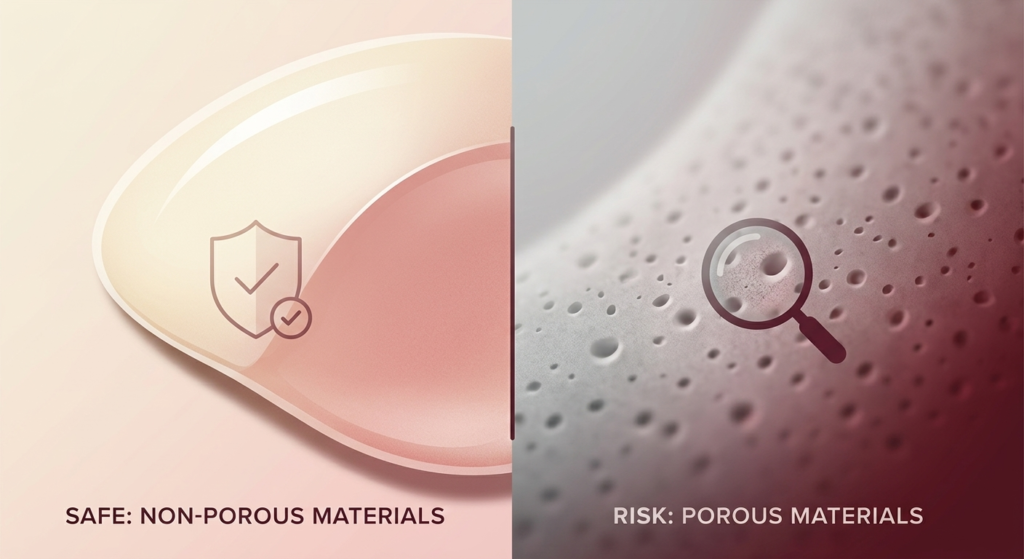
Material choice directly impacts your hygiene and comfort.
Using unsafe materials can lead to:
- Irritation
- Bacterial buildup
- Reduced product lifespan
Porous toys can trap moisture and bacteria, making them harder to clean—even if they look clean.
👉 For long-term use, always prioritize safe sex toy materials over appearance or cost.
Silicone vs TPE vs Glass (Core Comparison)
| Material | Safety | Texture | Maintenance | Beginner Friendly |
|---|---|---|---|---|
| Silicone | ⭐⭐⭐⭐⭐ | Soft | Easy | ✅ Best |
| TPE/TPR | ⭐⭐ | Soft | Harder | ⚠️ Risky |
| Glass | ⭐⭐⭐⭐⭐ | Firm | Very easy | ✅ Good |
👉 Silicone and glass are the safest. TPE is common but more controversial.
Medical-Grade Silicone Explained
Medical grade silicone is one of the most trusted materials in the industry.
Why it’s considered body safe silicone:
- Non-porous (does not absorb fluids)
- Hypoallergenic
- Smooth and flexible
- Very durable for long term use
It’s also:
- Easy to clean
- Compatible with most cleaning methods
- Widely used in high quality consumer products
💡 Silicone is the best choice for beginners because it balances safety and comfort.
When to Choose Silicone
- You want a soft, flexible feel
- You’re buying your first product
- You want something easy to maintain
TPE, TPR, and Porous Materials (Risks)
TPE (thermoplastic elastomer) and TPR (thermoplastic rubber) are widely used because they’re cheaper to produce.
However, they come with drawbacks.
Key Issues:
- They are porous materials
- Can harbor bacteria
- Harder to fully sanitize
- May degrade over time
Some versions are labeled safer, but they are still not as reliable as silicone or glass.
Common Names to Watch:
- Jelly rubber
- TPR thermoplastic
- Silicone blend
- PVC toys (polyvinyl chloride)
👉 These can sometimes leach harmful substances, especially lower-quality versions.
Glass Sex Toys (Borosilicate Safety)
Glass sex toys are typically made from borosilicate glass, which is extremely strong and safe.
Why glass is body safe:
- Non-porous
- Completely chemically stable
- Very easy to clean
- Does not absorb bacteria
Unique Benefit: Temperature Play
Glass allows for temperature play:
- Warm water → relaxing sensation
- Cool water → refreshing sensation
When to Choose Glass:
- You want something ultra hygienic
- You prefer firm texture
- You want variety in temperature
Stainless Steel and Metal Toys
Stainless steel is another premium body safe material.
Benefits:
- Non-porous
- Extremely durable
- Easy to clean
- Excellent for temperature play
It’s often used in:
- Precision tools
- Some cock rings
- High-end metal toys
👉 It’s one of the most durable options in the sex toy industry.
ABS Plastic and Hybrid Materials
ABS plastic is often used in vibrating toys.
Why it’s safe:
- Non-porous
- Lightweight
- Often combined with silicone
However:
- It’s rigid
- Usually used as part of a hybrid design
👉 Safe when labeled high quality and phthalate-free.
🚨 Red Flags: Toxic Materials to Avoid
Watch out for these materials—they are common warning signs:
- ❌ PVC (polyvinyl chloride)
- ❌ Jelly rubber
- ❌ Unspecified “soft plastic”
- ❌ Strong chemical smell
- ❌ No material information listed
These may:
- Contain toxic materials
- Release chemicals
- Be unsafe for sensitive areas
👉 If a product doesn’t clearly list materials, treat it as a red flag.
How to Clean and Maintain Safely
Cleaning is essential—even with safe materials.
Basic cleaning:
- Warm water + mild soap and water
- Dry completely before storage
For deeper cleaning:
- Use dedicated toy cleaners
- Follow manufacturer instructions
Storage tips:
- Keep in a dry place
- Avoid mixing materials (especially silicone with silicone)
👉 Proper care extends product life and protects hygiene.
How to Choose the Right Material
Here’s a simple decision guide:
Choose Silicone if:
- You want comfort + safety
- You’re a beginner
- You want flexibility
Choose Glass if:
- You want maximum hygiene
- You like firm texture
- You want temperature play
Avoid TPE if:
- You want long-term durability
- You prioritize hygiene
🧠 Quick Checklist Before Buying
- Is it labeled body safe sex toy material?
- Is it non-porous?
- Is it phthalate free?
- Is it easy to clean?
- Is the brand transparent?
👉 If you can’t answer these, don’t buy it.
🔗 Internal Links
- best sex toys for beginners guide
- how to clean sex toys safely
- vibrator buying guide 2026
- bullet vibrator beginner guide
❓ FAQ — Body Safe Sex Toy Materials
To choose safe sex toys, look for non-porous materials like silicone, glass, or stainless steel. Avoid porous materials that can trap bacteria and always check for phthalate-free labeling.
Sex toys are safe for the body when made from high-quality, body safe materials. Unsafe materials can cause irritation or hygiene issues, so choosing the right material is essential.
Yes, some materials like PVC, jelly rubber, and low-quality TPE can be unsafe. They may contain harmful chemicals or degrade over time, making them less suitable for long-term use.
The best vibrator material is usually medical-grade silicone because it is soft, non-porous, and easy to clean. Glass and stainless steel are also excellent safe options.
A safe product clearly lists its materials, is non-porous, and is labeled phthalate-free. If the material is unclear or has a strong chemical smell, it’s best to avoid it.
✅ Conclusion
Choosing the right body safe sex toy materials is the foundation of a safe and comfortable experience. In 2026, the safest options remain silicone, glass, and stainless steel—while porous materials like TPE and PVC should be approached carefully. Focus on quality, transparency, and hygiene, and you’ll avoid most common mistakes.
👉 Want to make a confident first purchase? Start with silicone—it’s the safest, easiest, and most beginner-friendly option available.